
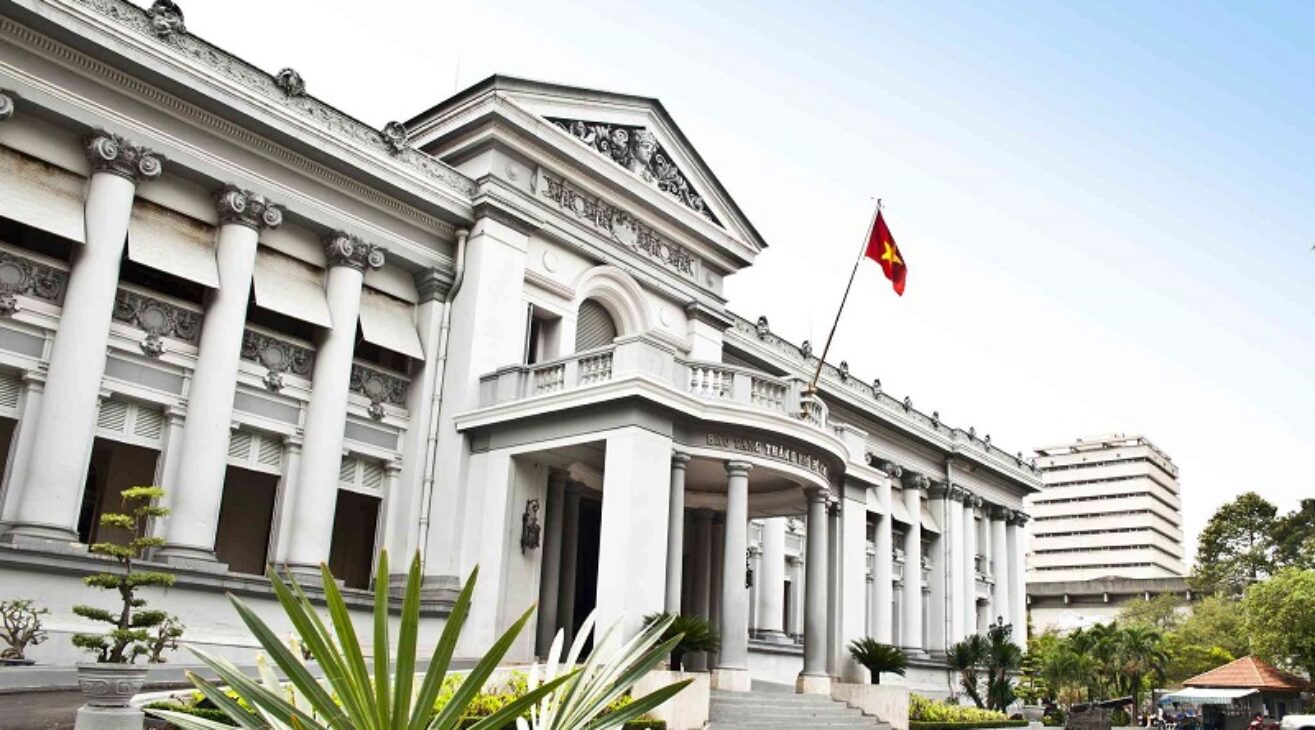
Museum of Ho Chi Minh City

Overview The Ho Chi Minh City Museum (Bảo tàng Thành phố Hồ Chí Minh) is a magnificent architectural landmark and an essential destination for anyone wanting to understand the deep history of this southern metropolis. Housed in a beautifully preserved century-old French colonial building, the museum vividly recreates the story of Saigon through different eras, from its wild origins to its modern identity.
1. Practical Information
-
Address: 65 Ly Tu Trong Street, Saigon Ward, Ho Chi Minh City. (The museum grounds cover nearly 2 hectares and are bounded by four streets: Pasteur, Ly Tu Trong, Nam Ky Khoi Nghia, and Le Thanh Ton).
-
Opening Hours: 8:00 AM – 5:00 PM daily (including weekends and public holidays).
-
Entrance Fee: 30,000 VND/person. Note: There is an additional 20,000 VND surcharge for bringing a professional camera. Students with a valid ID receive a 50% discount.
-
Contact: 028.38.299.741 – 028.38.298.250.
-
Getting There: The museum is located right in the city center. You can easily take buses 04, 18, or 36 from Ben Thanh Market or Ham Nghi station and get off at the Pasteur – Ly Tu Trong stop, which is just a 50-meter walk away.
2. A Building with a Tumultuous History
The museum building itself is a fascinating historical artifact.
-
1885 – 1890: Designed by French architect Alfred Foulhoux in a neoclassical style, it was initially intended as a Commercial Museum. However, it soon became the residence for high-ranking officials, including the Lieutenant Governor of Cochinchina.
-
Pre-1975: Known as Gia Long Palace, it served various political functions. In 1962, after the Independence Palace was bombed, President Ngo Dinh Diem relocated his office here.
-
1978 – Present: It was established as the Ho Chi Minh City Revolutionary Museum before being renamed the Ho Chi Minh City Museum in 1999. In 2012, it was recognized as a National Architectural and Artistic Monument.
3. What to See and Do
-
Admire the Euro-Asian Architecture: The building covers 1,700 square meters and features a symmetrical, Renaissance-inspired layout. Its facade is distinctly Western, adorned with reliefs of Greek mythology, while the roof exhibits subtle Asian influences.
-
Explore 9 Thematic Exhibitions: The museum offers a comprehensive journey through Saigon’s past.
-
The Nature & Archaeology Room displays ancient artifacts like stone axes and burial objects.
-
The Geography & Administration Room traces the city’s evolution from a wilderness to an Eastern citadel, a Western-style colony, and finally a modern metropolis, featuring 300-year-old maps.
-
The “Culture of Saigon – Ho Chi Minh City” Space celebrates the cultural diversity and convergence of the Viet, Cham, Hoa (Chinese), and Khmer ethnic groups who shaped the region.
-
-
Photography & “Check-in”: Thanks to its exquisite carvings, cinematic retro corridors, grand staircases, and vintage windows, the museum is highly popular among young locals and often serves as a backdrop for fashion photoshoots. Ensure your phone is fully charged to capture the nostalgic beauty of this site.
Read more at: https://hcmc-museum.edu.vn/