Explore Cho Lon – HCMC’s Chinatown
Literally, the Chinese community can’t be unrecognised in any top population region of the country, and Cho Lon presence is felt in almost every major city. From 18th century, Cho Lon (Big Market) has become an integral part of Saigon by its typical culture, lifestyle, and architecture reminiscent of years.
Religious Construction
Spot a typical construction with Chinese Architecture, colored in bright red, leading to the town of bright colors and lively narrow lanes. You will have the chance to see century-years-old famous places.
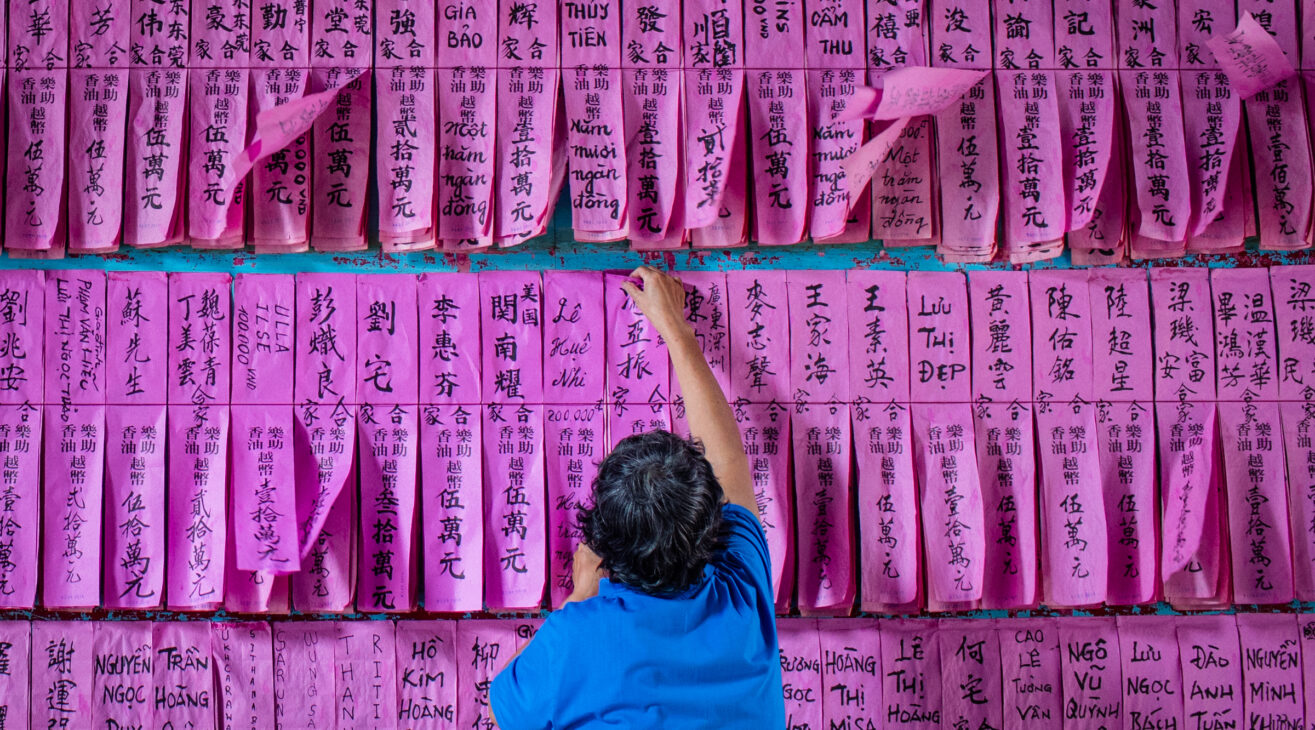
Thien Hau and Quan Am Temple are the two most attractive and religious places. Both feature unique Chinese-Buddhist style architecture and interiors with pagodas, statues, courtyards, altars, and paintings. As are common in most pagodas, the air is thick with the incense smoke floating through each corner, which is a part of religious ceremonies in traditional culture. Whereas, it is a perfect and serene setting for shooting.

Thien Hau Temple (710 Nguyen Trai Street, District 5) was built in 1760 that defied the Chinese Goddess of Sea, Mazu. There are 2 gates to access. You enter through an iron green front gate hanging lanterns and crossing a courtyard. Then exit from the right gate to a small street. It is decorated with delicate porcelain figurines expressing themes from its religion and legends. On Mazu’s Birthday (23rd March – Lunar calendar) or people calling it “Mazu Festival” – one of the most important cultural significance to celebrate the goddess of the sea. The annual pilgrimage takes place in Cho Lon, the main statue will be invited out from the altar and paraded through jam-packed streets. Thien Hau Temple is one of the oldest pagodas in Saigon of the Chinese.
Quan Am Temple (12 Lao Tu Str., Dist. 5) was built by Hokkien immigrants at the beginning of the 19th century and is dedicated to and named after the Chinese “Goddess of Mercy”, Guanyin.