10 must-visit attractions in HCMC
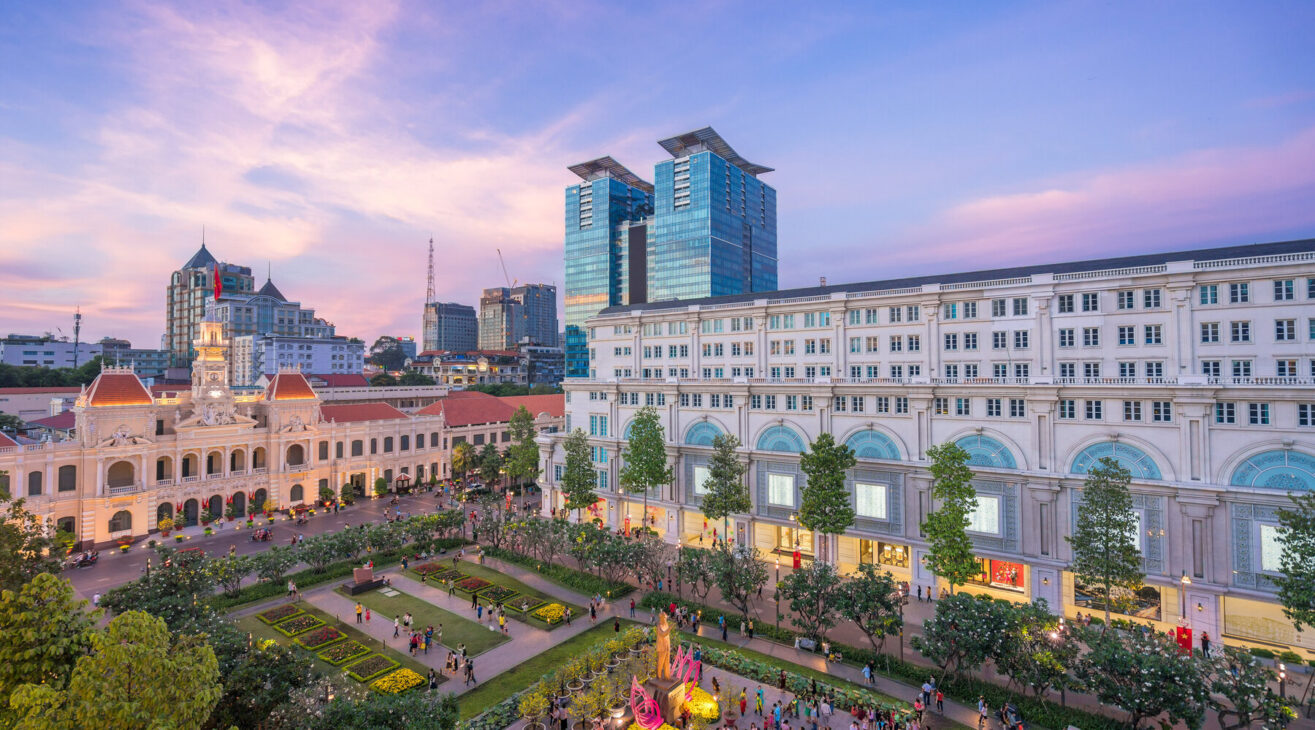
Ho Chi Minh City (commonly known as Saigon) is lively in every moment, day and night, memory and present, local lifestyle and architectural landscape. The 10 places to visit that we recommend will be attractive places in the city. You should visit to learn about the culture, history and life of the local people.
Independence Palace
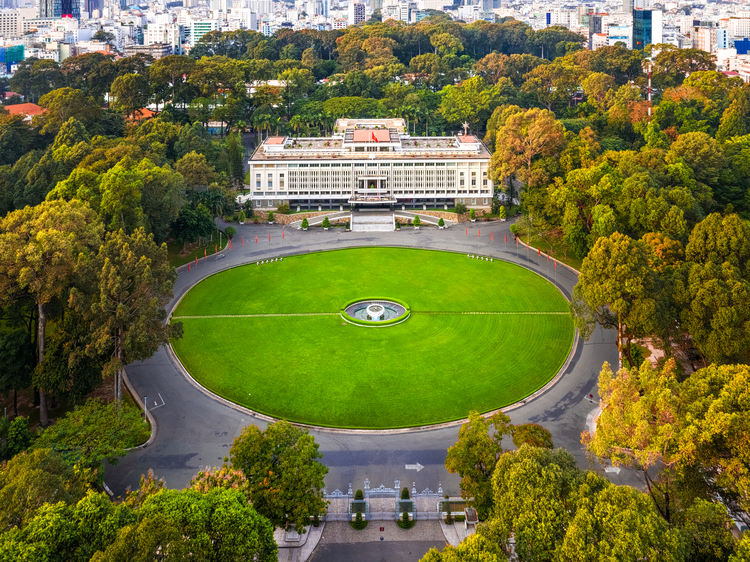
The work was built on the foundation of Norodom Palace, according to the design of architect Ngo Viet Thu. This is the place which marks the glorious historical victory of the nation on April 30, 1975, ranked as a special National Historical-Cultural relic. In 1976, the Independence Palace was called Reunification Hall. Today, when visiting, visitors can order a narrator or an audio guide to learn more about the history and special events here. Visitors should visit the area displaying information and documents about Norodom Palace (1868) first, then visit the information room about the main building of the Independence Palace (1966) to make the journey more complete and interesting. Inside the palace, there are souvenir shops, restaurants and cafes to serve visitors.
Tips: “Don’t forget to enjoy the trio artworks of Quoc To Hung Vuong, Son Ha Cam Tu, and Hai Nang Kieu”
Independence Palace, 135 Nam Ky Khoi Nghia Street, Ben Thanh Ward, District 1, Ho Chi Minh City.
Website: www.dinhdoclap.gov.vn
Notre Dame Cathedral
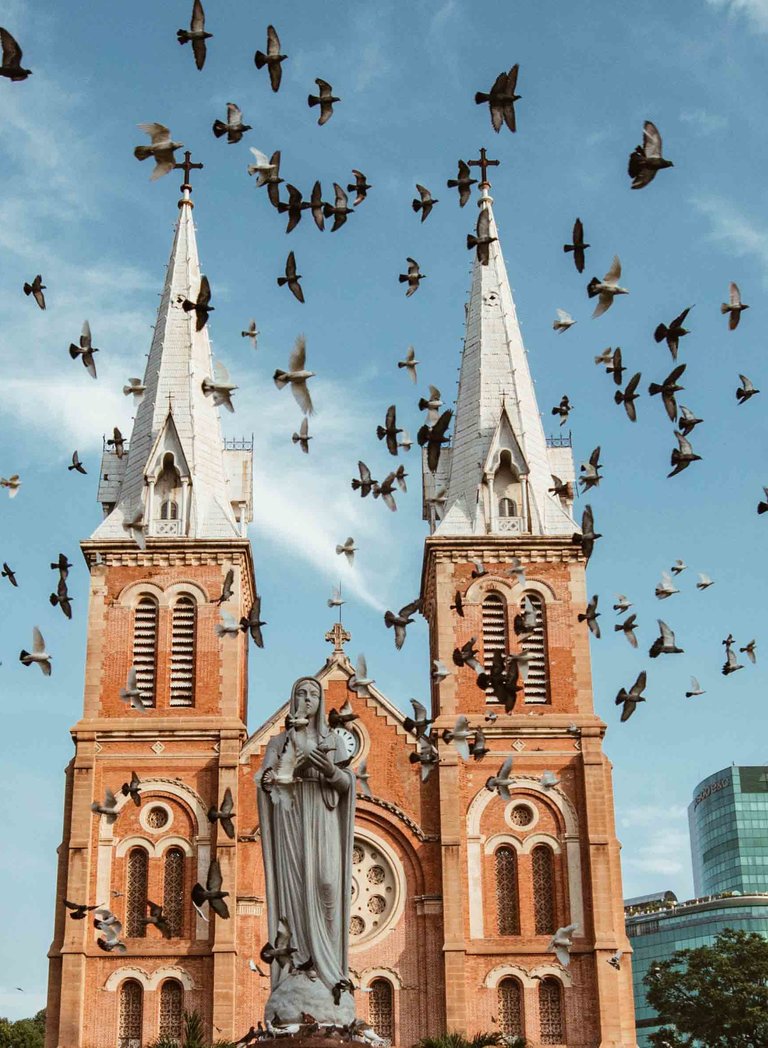
Notre-Dame Basilica was built according to the design of architects Bourard and Bishop Colombert. It was inaugurated in 1880. The outside of the church was built with bricks made in Marseille (France) without plastering, still maintaining bright pink color, no moss dust to this day. This place is considered as a peaceful oasis in the busy city center.
Tips: “The statue of Our Lady of Peace in front of the church is made of Italian Carrara white marble and carved in Pietrasanta about 500 km from Rome”.
Notre Dame Cathedral, 1 Paris Commune Square, Ben Nghe Ward, District 1, Ho Chi Minh City.
Tan Dinh Church
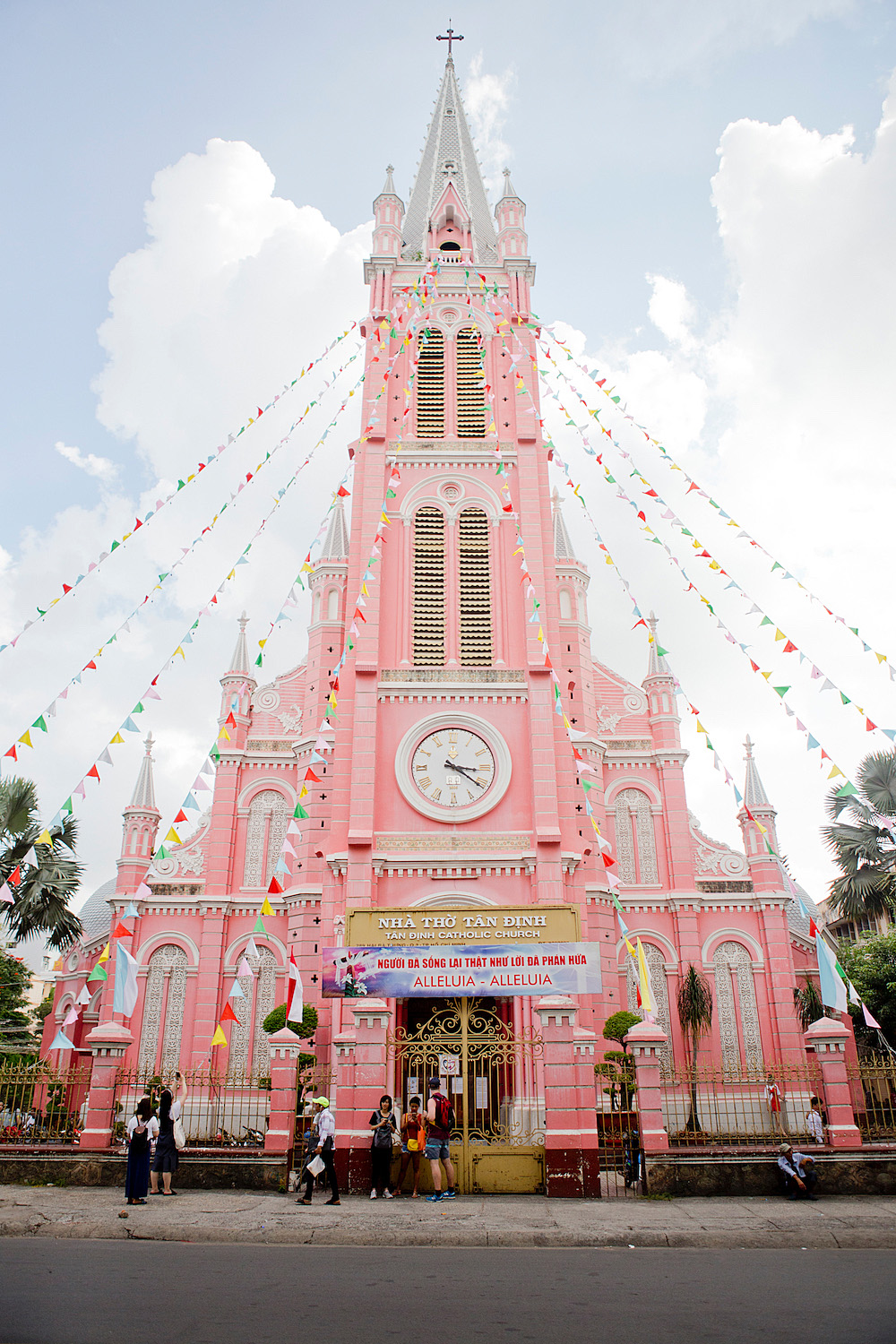
Sacred Heart Church, located on Hai Ba Trung Street, was built in 1876 in the Gothic and Roman style, mixed with a bit of Baroque. The bright pink color on the outside alternating with white and blue decorative lines makes the whole work more sparkling under light blue sky. The church attracts many visitors to take photos and check-in because of its unique beauty in the city center.
Tips: “The altars in the cathedral were crafted from precious stones and shipped from Italy”.
Tan Dinh Church, 289 Hai Ba Trung Street, Ward 8, District 3, Ho Chi Minh City.
Giac Lam Pagoda
The temple was built by an Chinese overseas named Ly Thuy Long who contributed money to build in 1744 and became the ancestral home of the Lam Te sect, Vietnamese Buddhism. Structures and Buddha statues layout style based on the ancient pagoda of South Vietnam. The system of envelopes and diaphragms are delicately carved, elaborately conveying the wishes of an elegant, happy and harmonious life through the images of apricot flowers, bamboo branches, cranes, custards, etc. Besides that, the pagoda still holds many sets of gold lacquer and precious wood statues such as the Eighteen Arhats, Tam The Buddha, Amitabha Tam Ton and ancient books, inscriptions of Buddhist scriptures. Entering the lunar month of July every year, Giac Lam Pagoda organizes a very solemn Vu Lan Ceremony to welcome local people and tourists to visit and pray for peace.
Tips: “This is the oldest temple in Saigon, still preserving the jewel of Buddha’s relics and Bodhi tree before Venerable Narada brought it from Sri-Lanka to Vietnam.”
Giac Lam Pagoda, 565 Lac Long Quan Street, Ward 10, Tan Binh District, Ho Chi Minh City.
Central Post Office
Central Post Office is one of the architectural works built in Ho Chi Minh City at the end of the 19th century in the European classical architectural style by 2 French architects Alfred Foulhoux and Henri Auguste Vildieu. Inside the post office resembles the Orsay station in Paris and this post office was built by Eiffel’s materials (France) transferred to Vietnam. Along the two sides of the corridor, many archival items, photos of the country and people of Vietnam are sold as souvenirs. This is an ideal place to rest after walking around the city center. Sitting on the old wooden benches while looking at and taking pictures of old letters and old phone booths is an unforgettable experience.
Tips: “Don’t forget to look at the 2 oil-painted maps of Saigon and its vicinity in 1892 South in the new construction period 1936 at the main gate”
Central Post Office, 2 Paris Commune Square, Ben Nghe Ward, District 1, Ho Chi Minh City.