
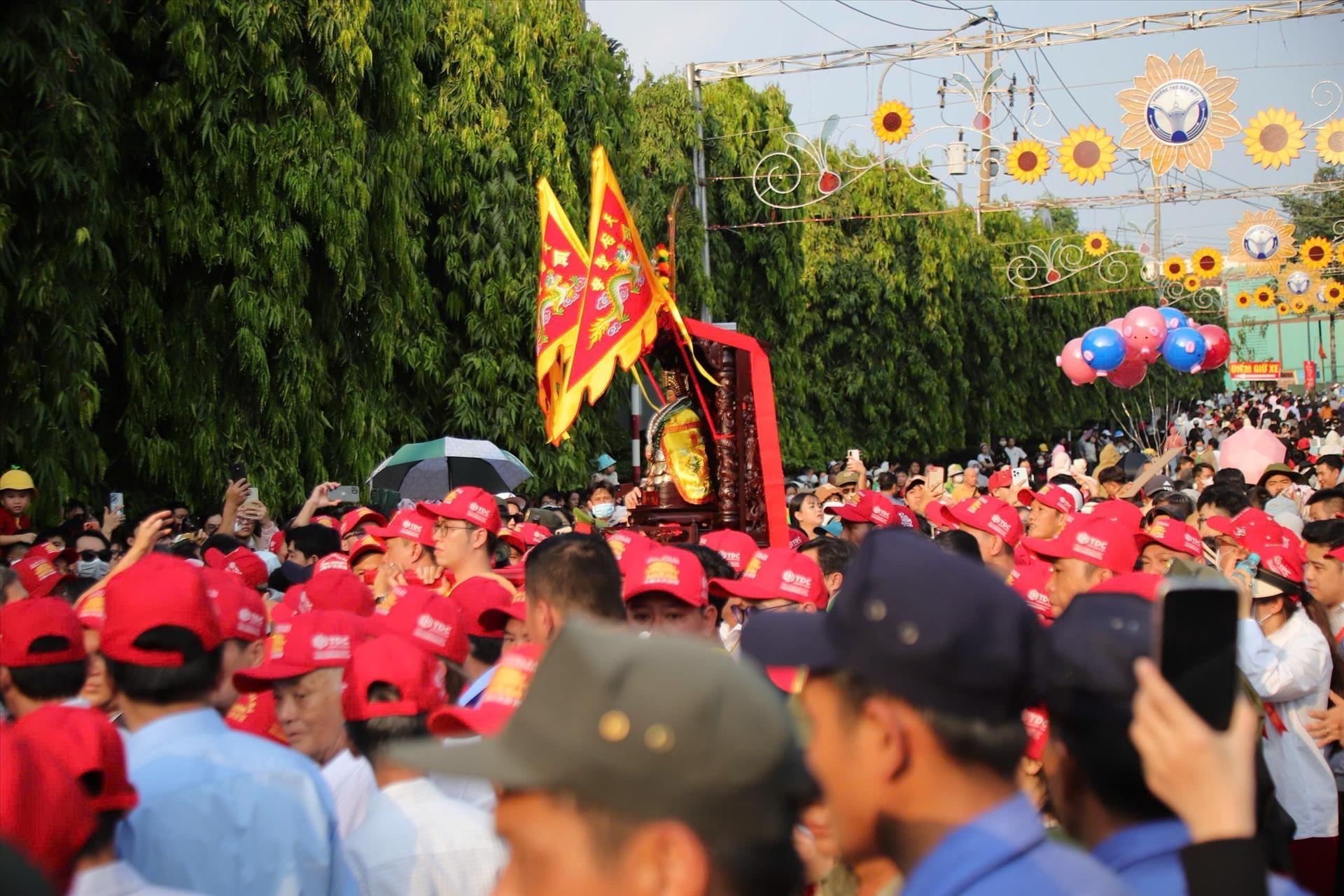
1. About the Laydy Thien Hau Pagoda Festival
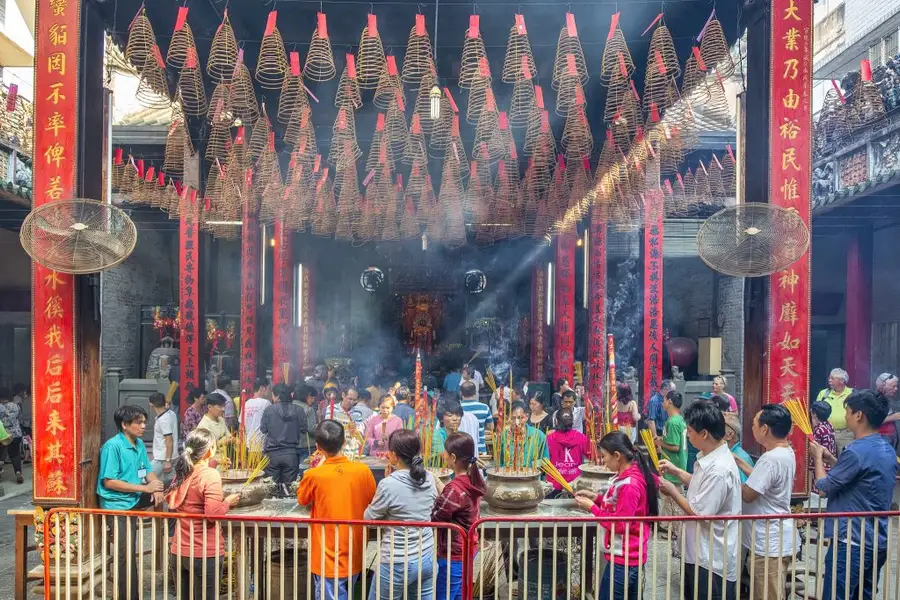
Every year on the full moon of the 1st Lunar Month, the streets around Thu Dau Mot fill with incense smoke, lion drums, and tens of thousands of pilgrims making their way to one of the most beloved spiritual sites in Southern Vietnam. This is the Laydy Thien Hau Pagoda Festival, widely regarded as the largest full moon festival in the entire Southeast region.
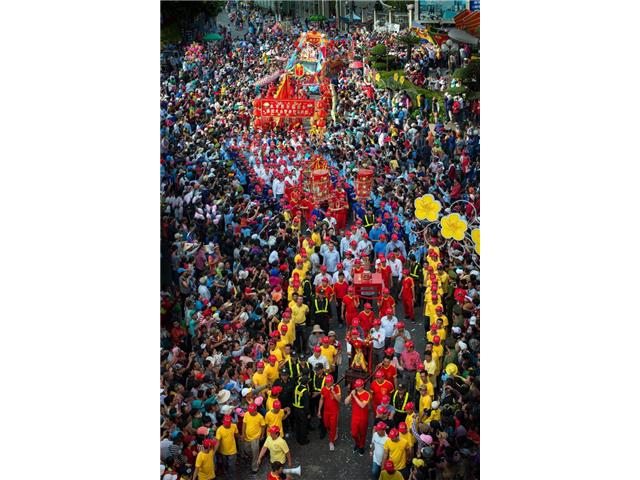
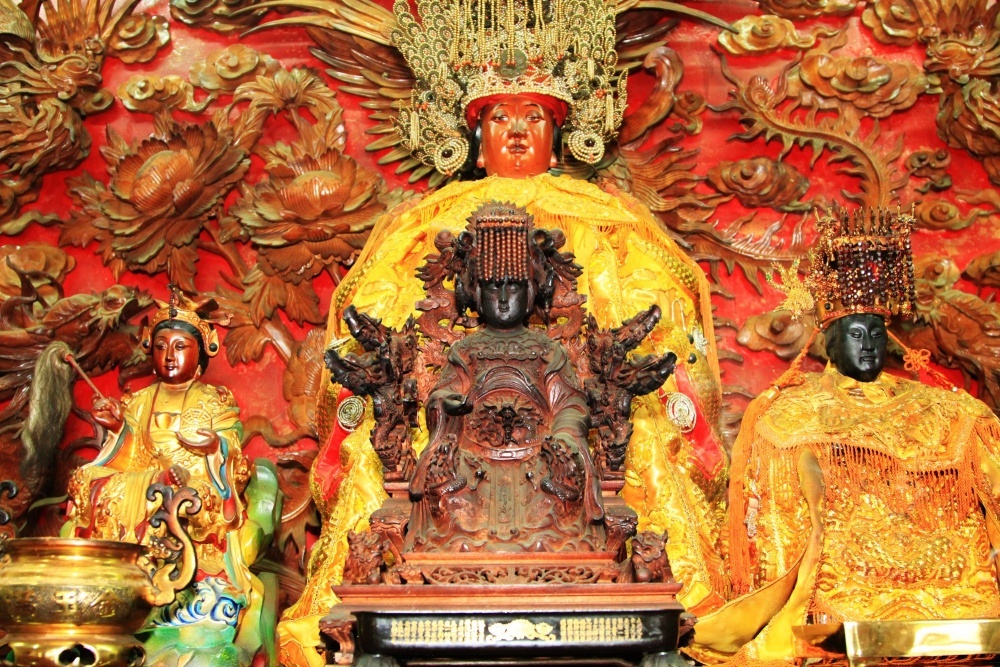
The pagoda itself is more than a century old, founded by four Chinese dialect communities who settled in Binh Duong: Teochew, Fujianese, Cantonese, and Hakka. Together they built a place of worship for Thien Hau Thanh Mau, the Goddess of the Sea and Heavenly Mother, a figure revered across Chinese communities throughout Southeast Asia.
Legend holds that her real name was Mi Chau, born in Fujian, China, who left her body in a trance while weaving beside her mother to rescue her father and brothers from a storm at sea. She was later deified, and for generations since, fishermen, merchants, and ordinary families have sought her protection at the start of each new year.
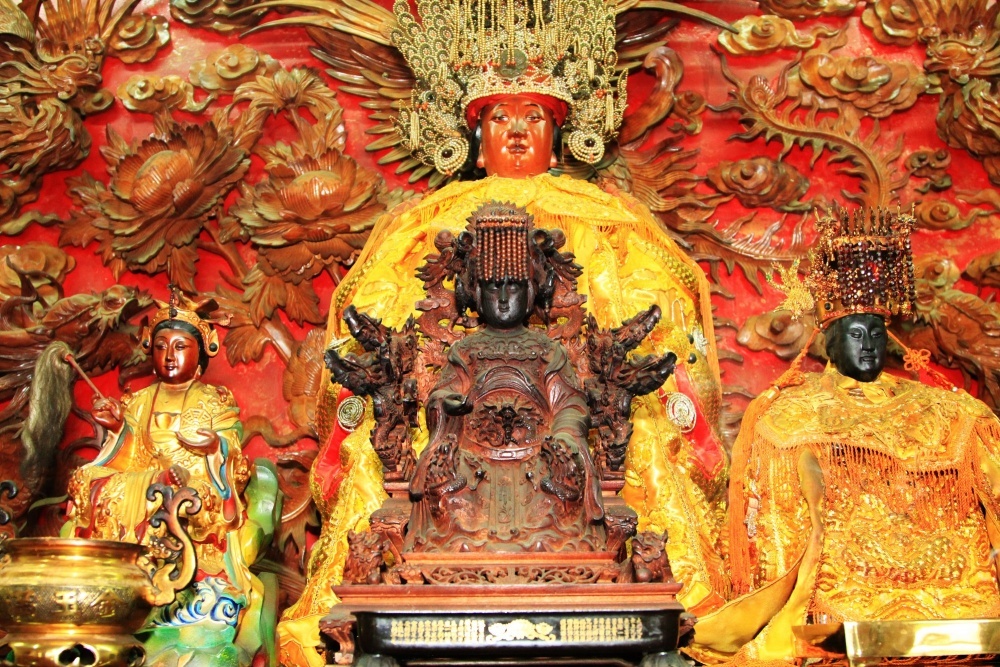
What gives this festival its particular weight is not just its scale but the sincerity of the people who come. This is not a destination people stumble upon. They make the journey on purpose, from Ho Chi Minh City, Dong Nai, Vung Tau, and provinces across the South, because they believe it matters.
2. Key Activities
The peak days are the 14th and 15th of the 1st Lunar Month, falling on March 2 and 3, 2026. On the morning of March 3, the sacred palanquin ceremony begins at 9 AM, followed at 3 PM by the main procession through the central streets of the ward.
The night before, from midnight on the 14th into the early hours of the 15th, the ceremony of worship opens with a liturgical text recited in Cantonese praising the Goddess’s merits, followed by incense offerings and prayers. The pagoda is decorated with flags and lanterns from the entrance gate all the way to the inner altar. Twelve large ornamental lanterns representing the twelve months of the year hang in a long row across the forecourt.
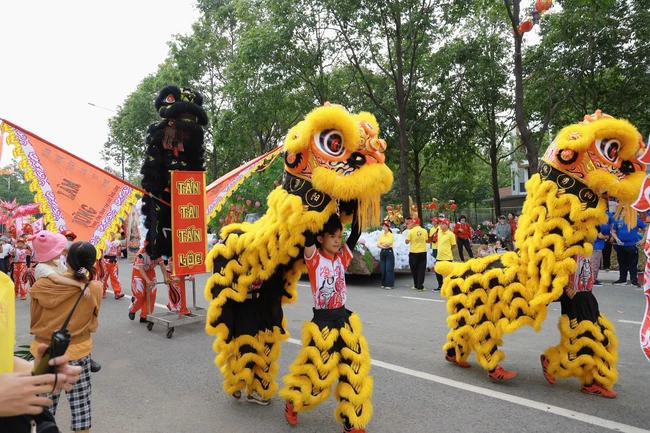
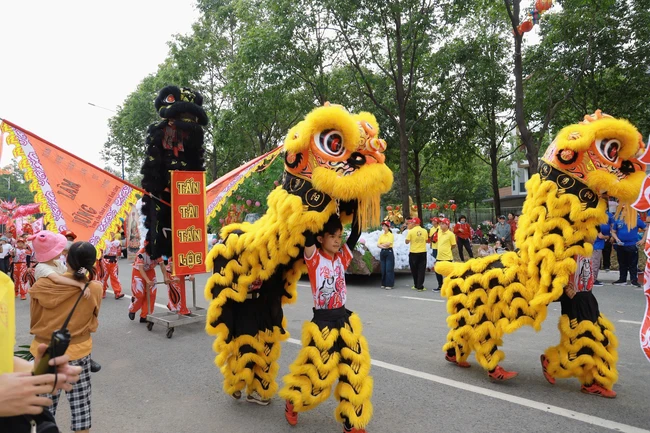
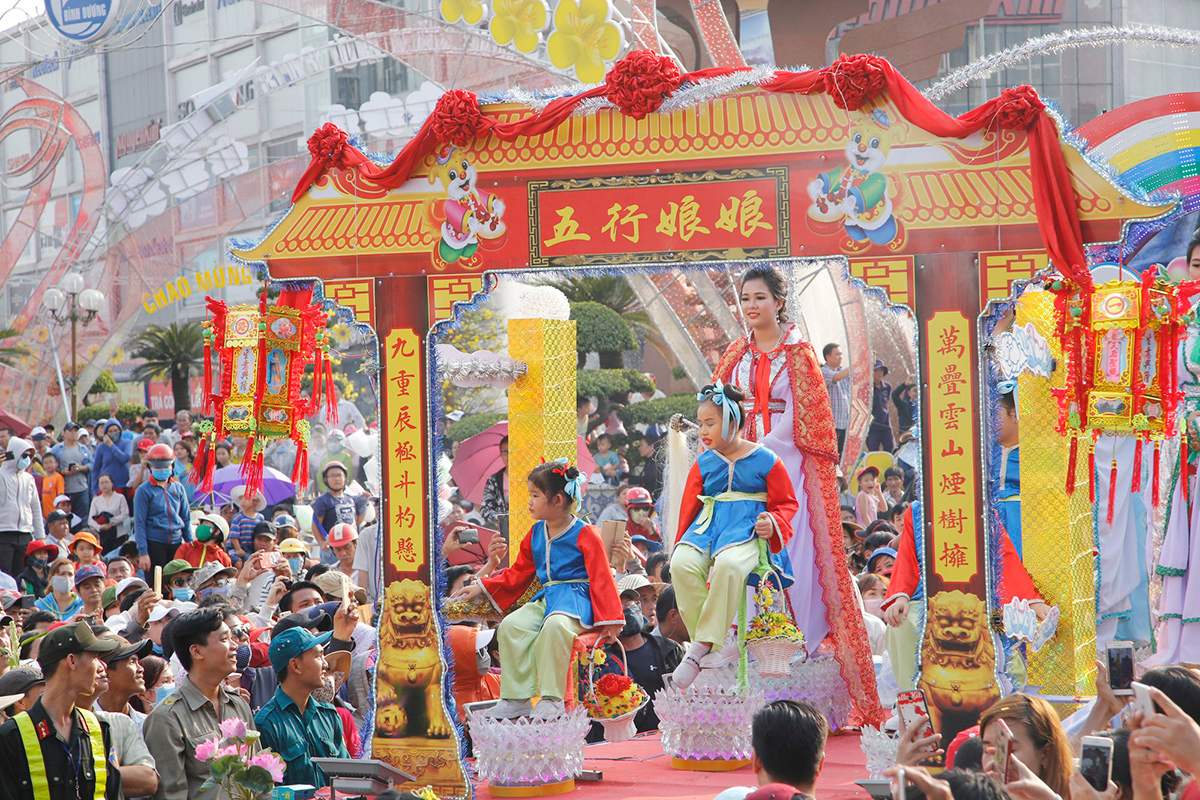
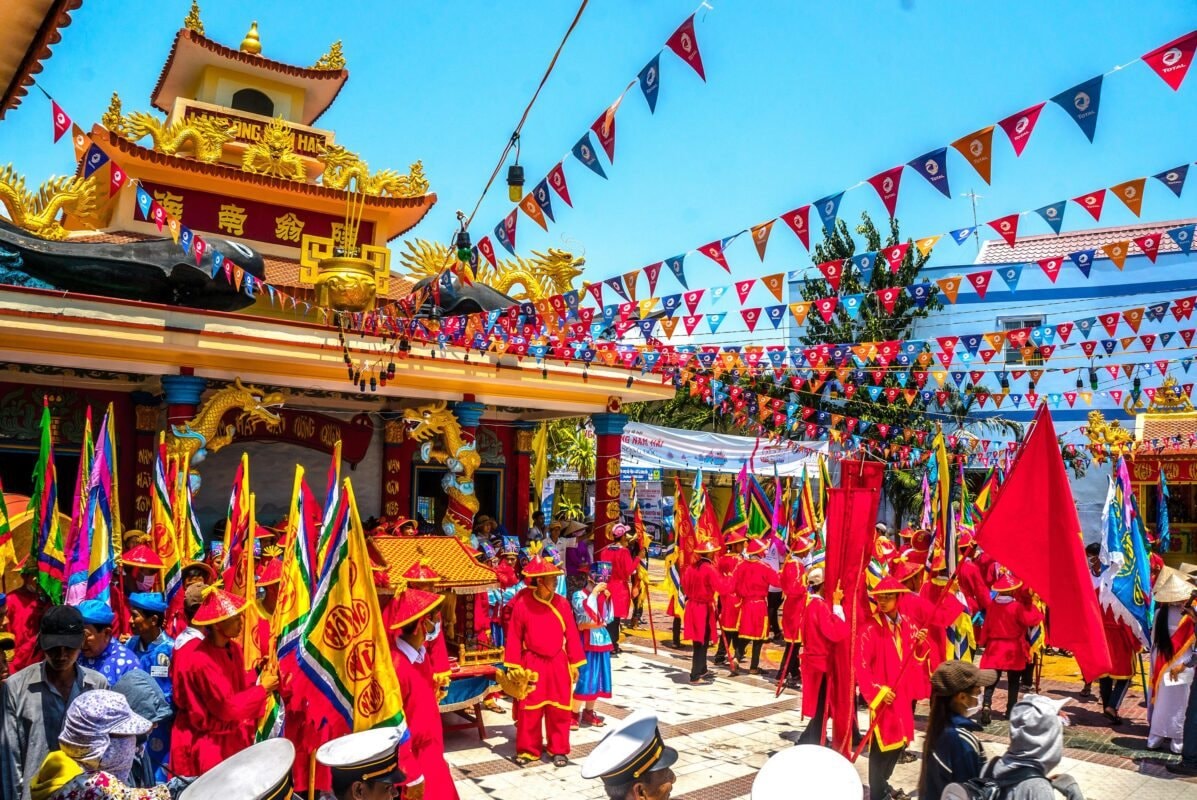
The procession itself features performers dressed as Quan Am Bo Tat, the Goddess Thien Hau, and the Gods of Fortune, accompanied by more than 25 dragon and lion dance troupes, flower floats, and ceremonial flag bearers from the four founding Chinese communities. When the palanquin passes, people along the route press their palms together and bow, sending wishes for a peaceful and prosperous year.
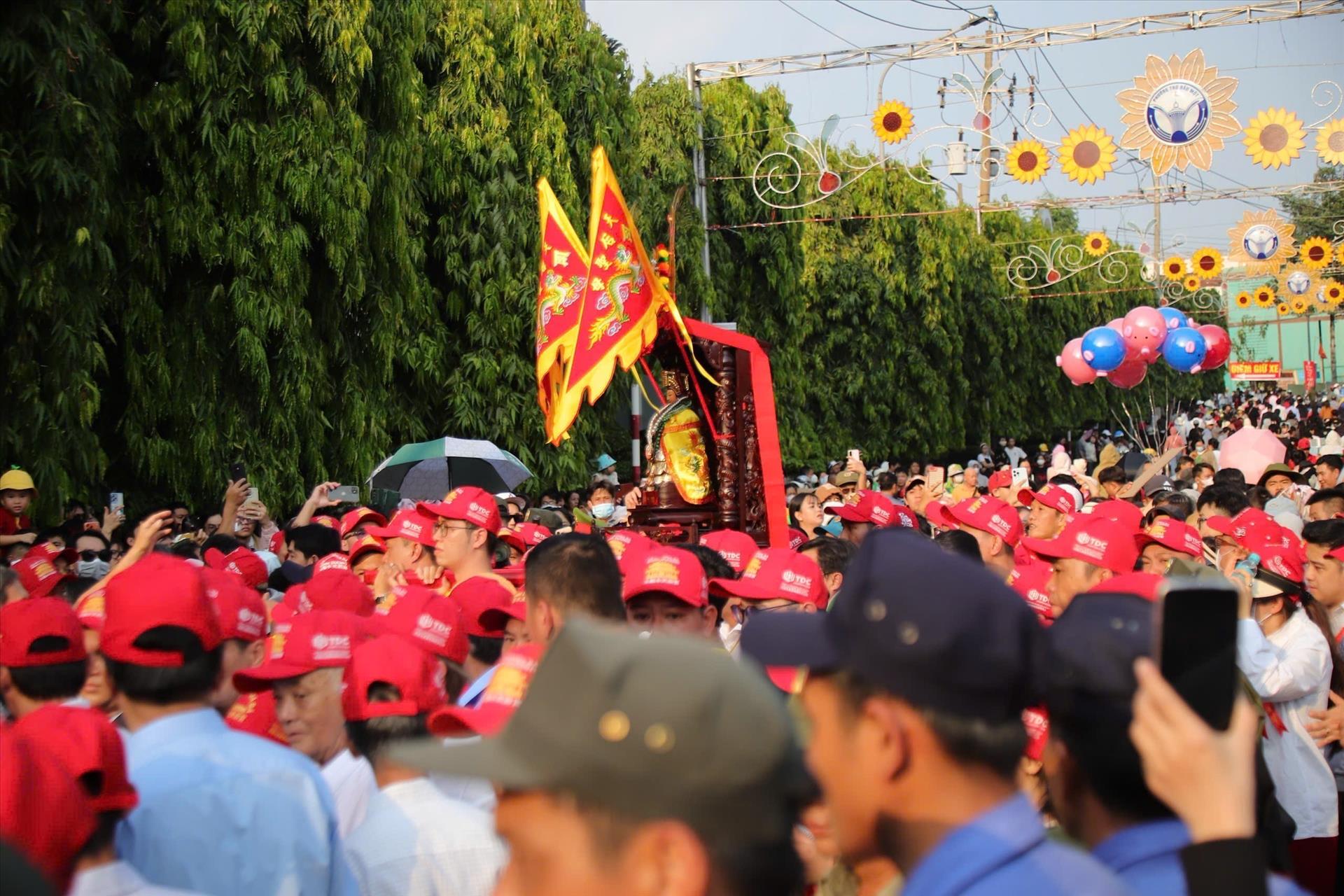
(Photo: Huyền Trang – TTXVN)
Throughout the festival days, the surrounding streets and temples also hold their own rituals. Nearby pagodas including Chua Hoi Khanh, Chua Thanh An, and Chua Tay Tang all hold ceremonies in parallel, making the entire neighborhood feel like one continuous act of collective devotion.
One distinctive local tradition: food, incense, drinking water, and even lucky branches are distributed free of charge to all visitors by volunteer groups throughout the festival.
3. Tips
- The procession route runs from Laydy Thien Hau Temple through Yersin, the six-way roundabout, Tran Hung Dao, Nguyen Thai Hoc, Bach Dang, Doan Tran Nghiep, Hung Vuong, Cach Mang Thang Tam, and Nguyen Du before returning to the pagoda. Pick a spot along Tran Hung Dao or Hung Vuong early if you want to see the palanquin up close.
- The pagoda address is 4 Nguyen Du Street, Thu Dau Mot Ward, HCMC. From central Ho Chi Minh City it is about 30 kilometers north. The easiest way is by motorbike or grab car. Free motorbike taxi shuttles are organized along the main roads around the festival area for elderly visitors, children, and those parked far from the pagoda.
- Arrive before noon on March 2 if you want to experience the quieter, more contemplative atmosphere of the midnight ceremony. The crowds on March 3 afternoon are enormous and beautiful in their own way, but the night before has a stillness that is harder to find once the procession begins.
- Dress modestly. The pagoda is an active place of worship and the people around you are there for sincere reasons. Observe before you photograph.
(Photo: Internet)
Location
Similar Listings
Only guests who have booked can leave a review.